
For decades, coal has been traded, purchased, and negotiated as if it were interchangeable. A ton is a ton. A shipment is a shipment. Price per metric tonne dominates decision – making spreadsheets.
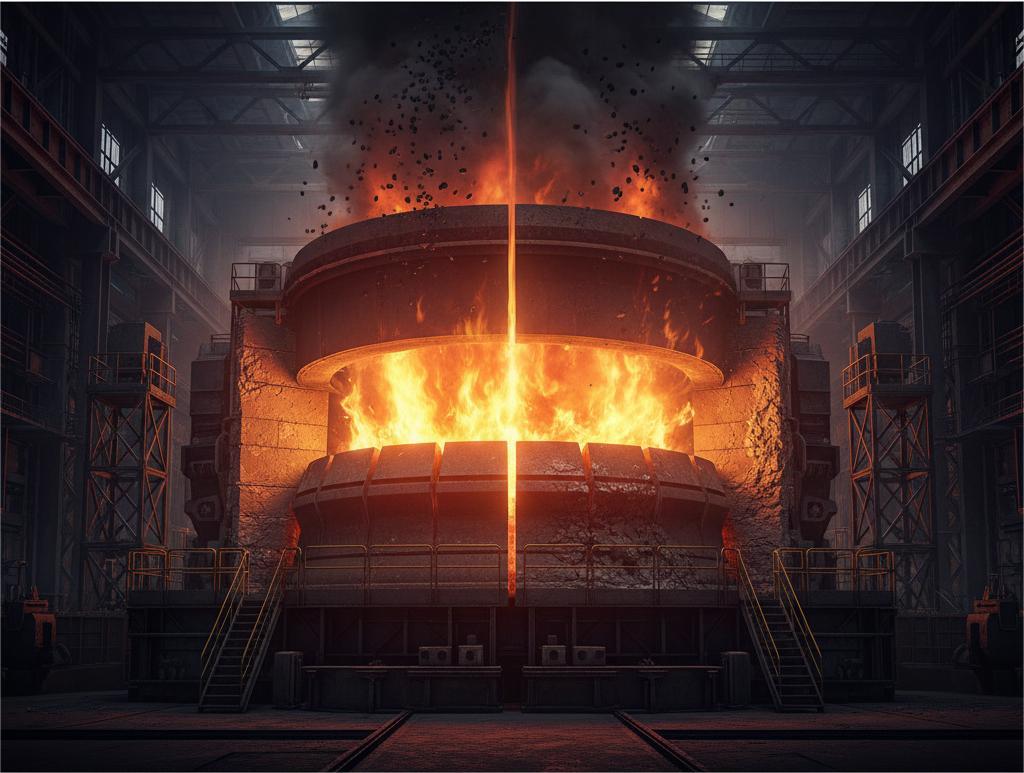
Inside a running furnace, however, coal behaves nothing like a commodity.
Two imported coals with the same invoice value can behave wildly differently once exposed to heat, oxygen, and time. One stabilizes flame, protects refractory, and allows continuous operation. The other creates slag rings, temperature oscillations, and emergency shutdowns that cost far more than the coal itself.
In high – temperature industries – steel, sponge iron, ferro alloys, cement, coal selection quietly decides furnace stability long before operators ever touch a control panel.
The Myth of “Average” Coal
Most purchase contracts still rely on simplified averages :
- GCV above a minimum
- Ash below a ceiling
- Moisture “acceptable”
- VM “in range”
But furnaces do not burn averages.
They burn behavior under heat, minute by minute.
A coal with :
- 6,200 kcal/kg GCV
- 14% ash
- 22% VM
may outperform a 6,800 kcal/kg coal in real operations because stability is not driven by calorific value alone.
GCV Is the Entry Ticket, Not the Decider
Imported thermal and metallurgical coals typically fall between :
- 5,000 – 6,800 kcal/kg ( ARB )
At first glance, higher GCV seems superior. In practice, how that energy releases matters more than how much exists on paper.
Operational Reality :
- High – GCV coal with very low VM can burn too slowly
- Flame becomes unstable during load changes
- Operators compensate by over – injecting oxygen or fuel
- Thermal stress increases on furnace walls
Conversely :
- Mid – range GCV coal ( 5,800 – 6,200 kcal/kg ) with balanced VM often produces :
- More consistent flame front
- Better heat distribution
- Lower temperature fluctuations
Stable energy > maximum energy
Volatile Matter : The Flame Controller
VM ( Volatile Matter ) determines how fast coal ignites and how aggressively it burns.
Typical VM Ranges by Imported Origin :
- Low VM (8 – 12%) – Hard coking / some Australian coals
- Medium VM (18 – 24%) – Indonesian, South African blends
- High VM (28 – 35%) – Certain Indonesian sub-bituminous coals
Why VM Matters in Furnaces :
- High VM :
- Faster ignition
- Longer flame
- Higher risk of flame instability if uncontrolled
- Low VM :
- Delayed ignition
- Requires higher temperatures to sustain combustion
- Can cause cold zones during start – ups
Furnace stability often lives in the 18 – 24% VM zone, especially in rotary kilns and DRI operations.
Ash : Where Chemistry Turns Dangerous
Ash is not just a percentage. It is a chemical personality.
Typical Imported Coal Ash :
- 6 -10% – Premium Indonesian
- 10 – 18% – South African / blended coals
- 18 – 25%+ – Certain high – ash imports
But more important than quantity is composition.
Slagging Begins When :
- Ash contains high Fe₂O₃, Na₂O, K₂O
- Ash fusion temperature drops below furnace operating temperature
- Molten ash sticks to refractory and charge material
Real Impact :
- Slag ring formation
- Reduced effective furnace diameter
- Uneven heat transfer
- Forced shutdowns for mechanical removal
A single slag – related shutdown can cost ₹30 – 70 lakhs in lost production, fuel waste, and restart time, often dwarfing any savings made by buying cheaper coal.
Moisture : The Invisible Energy Thief
Moisture doesn’t show up in flame color, but it steals energy before combustion even begins.
Imported Coal Moisture Ranges :
- 6 – 10% – Low-moisture thermal coal
- 10 – 18% – Typical Indonesian shipments
- 20 – 30%+ – Rain-exposed or poorly stored cargo
What Moisture Does :
- Consumes heat to evaporate water
- Lowers effective GCV inside the furnace
- Delays ignition
- Creates temperature dips during continuous feed
In continuous furnaces, even a 3 – 4% moisture increase can cause :
- 1 – 2% drop in thermal efficiency
- Increased fuel feed rate
- Unstable flame during peak loads
Why Furnace Shutdowns Are Rarely “Sudden”
Most shutdowns blamed on “mechanical failure” begin weeks earlier, with coal.
Warning signs operators often miss :
- Increasing oxygen adjustments
- Rising ash carryover
- Uneven temperature profiles
- Slag accumulation in predictable zones
These are not operational errors. They are fuel – behavior mismatches.
Coal as a Performance Input, Not a Commodity
When coal is treated purely as a traded good :
- Price dominates
- Specs are averaged
- Origins are interchangeable
When coal is treated as a performance input :
- Origin consistency matters
- Blending becomes strategic
- Furnace life extends
- Output stabilizes
Leading plants now :
- Maintain origin – wise performance logs
- Blend coals to control VM and ash fusion
- Pay premiums for stability, not just GCV
- Reduce unplanned downtime by 15 – 25% annually
The Real Cost Equation
The real cost of coal is not :
₹/MT landed
It is :
₹ per stable operating hour
A coal that is ₹500 – 700/MT cheaper but causes :
- 1 extra shutdown per quarter
- 2% lower yield
- Higher refractory wear
…is not cheaper. It is simply more expensive in disguise.
So, Does All Coal Burn the Same?
On paper, maybe.
Inside a furnace, never.
Coal decides :
- Flame shape
- Temperature stability
- Slag behavior
- Shutdown frequency
- Furnace lifespan
Long before operators react, coal has already chosen the outcome.
And the plants that understand this don’t buy coal. They engineer combustion.
If your furnace could speak, would it thank you for the coal you feed it or warn you before the next shutdown?