
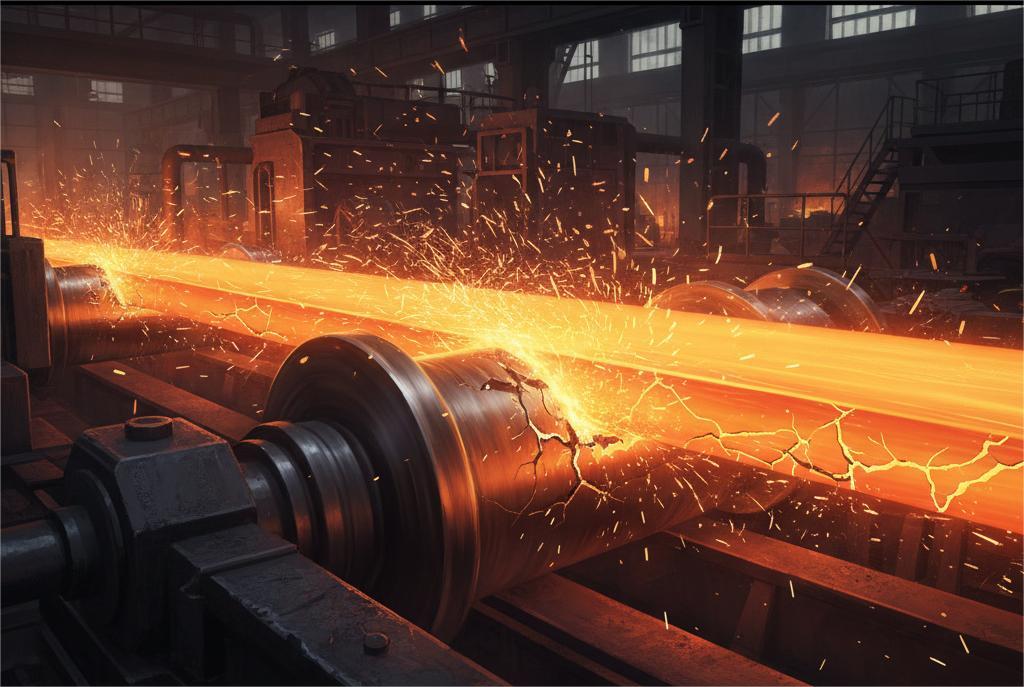
In steelmaking, finished products are often judged at the last stage – surface finish, dimensional accuracy, tensile strength, and elongation. When defects appear, the rolling mill is usually blamed.
In reality, most finished steel problems are already locked in long before the first rolling pass begins. They begin in the billet.
Billets may look uniform from the outside, but their surface integrity, internal chemistry, and structural consistency decide how steel behaves under stress, heat, and deformation. Rolling can only shape what already exists, it cannot fix what was wrong at casting.
The Hidden Cost of “Acceptable” Billets
Many plants operate with billets that are technically “within specification” but operationally risky.
A billet that meets :
- Size tolerance
- Minimum chemistry range
- Visual inspection norms
can still cause :
- Higher rolling losses
- Frequent cobbles
- Inconsistent mechanical properties
- Customer rejections downstream
Billet quality does not just affect steel performance, it decides how much steel survives the rolling process at all.
Surface Cracks : Small Defects, Massive Losses
Types of Common Billet Surface Defects
- Longitudinal cracks
- Transverse cracks
- Star cracks at corners
- Oscillation marks turning into fissures
These defects often originate from:
- Improper mould oscillation
- High casting speed
- Uneven secondary cooling
- Thermal shock during straightening
Why Rolling Makes It Worse
During rolling :
- Surface cracks open and elongate
- Minor defects become visible tears
- Cracks propagate across multiple passes
Real Impact
- Surface-related billet defects account for 30 – 40% of rolling mill rejections
- Each cobble can result in 2 – 5 tonnes of direct loss
- Frequent stoppages increase roll wear and power consumption
A crack of just 1 – 2 mm depth at billet stage can turn into full – length rejection in final bars.
Chemistry Control : The Backbone of Steel Performance
Billet chemistry is not just about hitting grade numbers, it’s about tight control within narrow bands.
Critical Elements & Their Effects
Carbon (C)
- Variations of ±0.02% can change :
- Strength
- Ductility
- Rolling temperature sensitivity
Manganese (Mn)
- Improves hot workability
- Low Mn leads to edge cracking
- Excess Mn increases hardness, causing roll stress
Sulphur (S)
- 0.030% increases hot shortness
- Causes edge cracking during rolling
Phosphorus (P)
- Increases brittleness
- Reduces impact toughness
Operational Reality
Billets with chemistry swings show:
- Uneven elongation
- Temperature mismatch between strands
- Higher mill adjustments
Plants maintaining tight chemistry windows report :
- 10 – 15% lower rolling losses
- More consistent mechanical test results
Internal Quality : Defects You Don’t See, Until It’s Too Late
Billets can appear flawless externally while hiding :
- Central porosity
- Shrinkage cavities
- Segregation bands
How Internal Defects Affect Rolling
- Weak core collapses under reduction
- Internal cracks surface after multiple passes
- Bars fail bend or impact tests
Data from Rolling Mills
- Internal billet defects contribute to 20 – 25% of unexpected failures
- Result in downgraded or rejected finished products
- Increase customer complaint rates significantly
Rolling Losses : Where Billet Quality Shows on the Balance Sheet
Typical Rolling Yield Losses
- Average mills: 3–4%
- Poor billet quality: 5–7%
- High-quality billets: <2.5%
For a mill rolling 300,000 tonnes/year :
- 1% extra loss = 3,000 tonnes lost
- At ₹50,000/tonne → ₹15 crore annually
Billet quality directly impacts :
- Yield
- Power consumption
- Roll life
- Downtime frequency
Temperature Behavior : The Silent Factor
Billets with inconsistent chemistry and structure :
- Heat unevenly
- Lose temperature faster at edges
- Require higher furnace soak time
This leads to :
- Increased fuel consumption
- Scale formation
- Dimensional inconsistencies
A 20 – 30°C temperature variation across billet length can :
- Increase rolling defects by up to 12%
- Shorten roll life by 8–10%
Why Rolling Mills Can’t “Fix” Bad Billets
Rolling mills are deformation tools, not correction tools.
They cannot :
- Heal cracks
- Redistribute chemistry
- Eliminate segregation
- Repair porosity
What they can do is amplify defects under stress and heat.
The Best Mills Think Backward
Successful steel producers don’t ask :
“Can we roll this billet?”
They ask :
“How will this billet behave after five passes, six stands, and final cooling?”
That mindset shift changes :
- Supplier selection
- Inspection protocols
- Cost evaluation
High – performing mills treat billets as precision inputs, not sem i – finished stock.