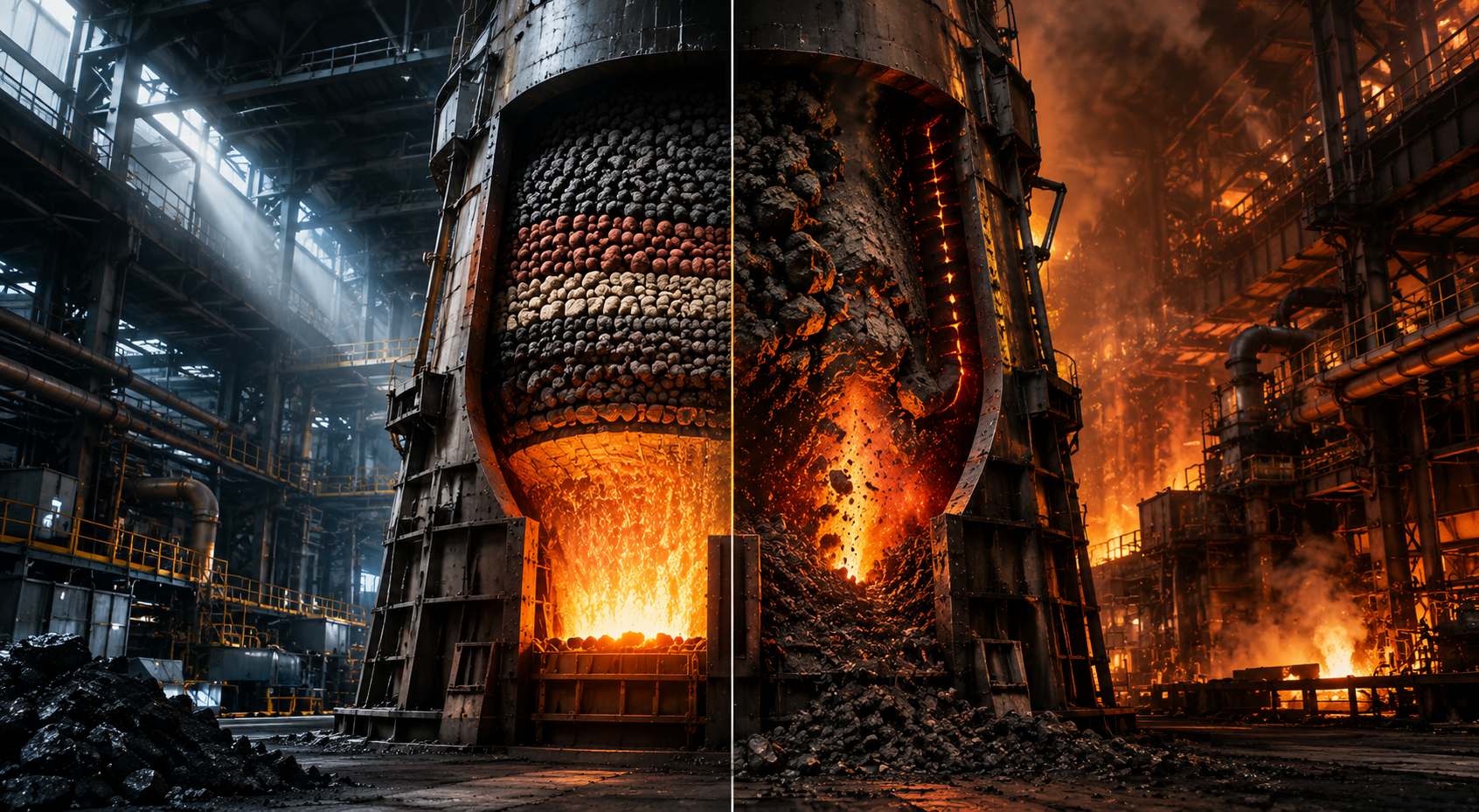

Coke Is a Structural Material, Not Just Fuel – Reframing Coke’s role in modern Ironmaking

In discussions about ironmaking, coke is often reduced to a simple definition : Fuel. But inside a blast furnace, coke does something far more critical than just burn. It holds the entire process together. Coke is not merely an energy source, it is a structural material, a gas flow regulator, and a reaction platform that […]

Coke Is a Structural Material, Not Just Fuel – Reframing Coke’s role in modern Ironmaking Read More »

Sinter’s Real Value Is Not Iron, It’s Flexibility – Why do sinter plants still matter despite emissions?

In modern ironmaking discussions, sinter often finds itself under scrutiny. Because of this, sinter plants are sometimes viewed as outdated or environmentally burdensome. Yet despite these concerns, the majority of the world’s blast furnaces still rely heavily on sinter. In fact, sinter continues to supply over 60 – 70% of the iron-bearing burden in many

Sinter’s Real Value Is Not Iron, It’s Flexibility – Why do sinter plants still matter despite emissions? Read More »

Why Two Billets of the Same Grade Roll Differently – The truth about internal structure

At first glance, two billets stamped with the same grade look identical. Same dimensions.Same heat number range.Same chemistry report. Yet once they enter the rolling mill, their behavior can diverge dramatically. One rolls smoothly, elongates predictably, maintains surface integrity, and delivers stable mechanical properties. The other may :  If the grade is the same, what

Why Two Billets of the Same Grade Roll Differently – The truth about internal structure Read More »

The Illusion of Cost Control in Steelmaking  – Why savings often create losses later

Steelmaking has always been a margin-sensitive business. Raw materials fluctuate. Energy costs swing unpredictably. Demand cycles rise and fall with infrastructure, automotive production, and global trade. In such an environment, cost control becomes a survival instinct. But here’s the uncomfortable truth :  In steelmaking, many cost-saving decisions don’t reduce cost, they postpone it. And when

The Illusion of Cost Control in Steelmaking  – Why savings often create losses later Read More »

Pig Iron’s Strategic Role in Consistent Melt Chemistry

In modern steelmaking, especially in scrap-heavy Electric Arc Furnace (EAF) and Induction Furnace (IF) operations, variability is the biggest operational risk. Scrap chemistry fluctuates.Residual elements accumulate.Melting times vary.Energy input becomes inconsistent. In this environment, one material quietly stabilises the entire melt cycle :  Pig iron. Often treated as a supplementary input or emergency corrector, pig

Pig Iron’s Strategic Role in Consistent Melt Chemistry Read More »

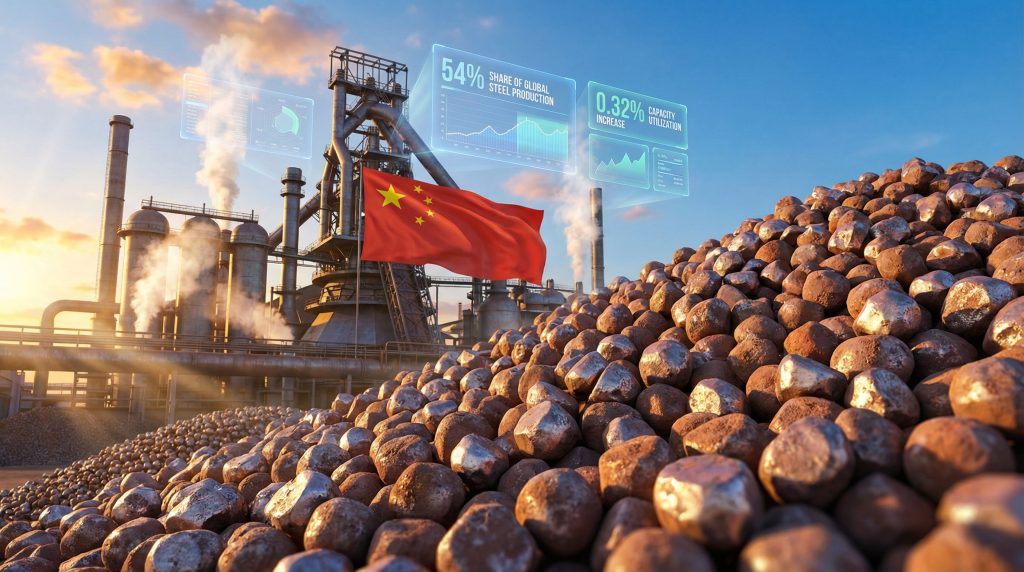
Pellets, Sinter, or Lump? The Real Economics Behind the Choice

In ironmaking, the raw material decision is often simplified into a checklist : availability, landed cost, and size specification. Yet inside the blast furnace or DRI kiln, the choice between pellets, sinter, and lump ore quietly dictates productivity, fuel consumption, emissions, and maintenance cycles. All three deliver iron.But they do so at very different economic

Pellets, Sinter, or Lump? The Real Economics Behind the Choice Read More »

Not All Coal Burns the Same – Why Imported Coal Choices Decide Furnace Stability

For decades, coal has been traded, purchased, and negotiated as if it were interchangeable. A ton is a ton. A shipment is a shipment. Price per metric tonne dominates decision – making spreadsheets. Inside a running furnace, however, coal behaves nothing like a commodity. Two imported coals with the same invoice value can behave wildly

Not All Coal Burns the Same – Why Imported Coal Choices Decide Furnace Stability Read More »